Wednesday, May 14, 2025

Marshall Breeding's 2025 Library Systems Report

On May 1, Marshall Breeding released the 2025 Library Systems Report. For decades, this report has summarized the state of the library systems market, highlighting changes and trends. Over the past several years, the key trend has been consolidation of the marketplace as larger companies and investment firms have acquired smaller system vendors to expand customer bases and absorb technological innovations into their existing suite of offerings.

This year, however, the dominating trend seems to be stability. As Breeding points out, private equity firms have largely cashed out of the market, selling their products to larger, more stable companies that are interested in long-term development and growth over fast profits. Despite that, Breeding predicts at least some mergers in the next few years, especially as the smaller privately-held companies reach a point where founders and generational leadership wind down. Breeding also predicts acquisitions of companies that have developed technologies outside of libraries that library systems vendors wish to incorporate in their next-generation offerings.

Most of the new technologies being developed for inclusion in library systems, as Breeding points out, are related to AI. Examples include:

  • Alma Specto: A digital collections management platform slated for release by early 2026 that Ex Libris is developing in partnership with other institutions.
  • Primo Research Assistant: Ex Libris' discovery add-on that can combine results from their Central Discovery Index with AI-generated summaries and suggestions. 
  • Natural Language Search and AI Insights: EBSCO's AI-assisted search interface and summary tools have completed extensive beta testing and are expected to be rolled out to all EBSCO customers by the end of the year.
Despite acknowledging the growing inclusion of AI in library systems, both in collections management and discovery, and admitting that AI tools could supplant existing technologies and give the competitive edge to the companies with the best implementations, Breeding concludes this year's report with a word of caution about these tools:

"Libraries will have to carefully parse which technologies can amplify their work and which may do harm. They are already working closely with vendors to ensure that products and services with AI features deliver appropriate results. Having the ability to automatically generate descriptive metadata at a speed and scale not previously imagined is an attractive prospect, but these tools must be accurate."

That is an astute point. AI is still prone to "hallucinations" and many users still misunderstand how AI works and blindly trust the results without double-checking, to their potential peril. A recent high profile story about a law firm that faced a $31,000 sanction for allowing hallucinations to slip into their filings demonstrates this point. It was not an isolated incident as other recent stories show

Wednesday, November 20, 2024

Tariffs and Library Technology

Anyone whose job involves dealing with library technology, either paying for it or maintaining it, has likely given some thoughts to the president-elect's vow to impose tariffs on imported goods. The proposed tariffs are more sweeping than he was able to accomplish in his first term. The most repeated promises are a 60%-110% tariff on Chinese goods, and a tax of between 10% and 20% on every imported product. In a report published just before the election by the Consumer Technology Association, the proposed tariffs could lead to the following price increases for some of the technology that libraries often buy.

  • 45% for laptops and tablets
  • 31.2% for monitors
  • 6.2% for desktop computers
  • 10.9% for computer accessories, such as speakers, headphones, printers, and scanners
Of course, specific impacts on individual libraries could vary greatly based on the institution's purchasing power and contracts with suppliers. It seems likely, though, that most libraries would see increases, with smaller libraries being hit proportionally harder. It's also conceivable that library resource providers, print and electronic, could increase prices to offset their own growing technology costs.

There are some obvious things libraries could do now to mitigate these likely increases to their technology costs.
  • Buy now, before the tariffs have a chance to go into effect. If resources are available, buy new or upgraded technology now to avoid paying more later. 
  • Negotiate with suppliers. If possible, speak to vendor representatives about extending contracts or agreements at current, or marginally higher, costs to avoid larger increases in the coming years. If applicable, make sure any maintenance contracts with vendors are up to date to cover repairs and avoid having to purchase replacement devices.  
  • Make do with current technology. Investigate strategies to increase the life of the technology already bought and paid for. Work with the institution's IT professionals to strategize how to make current devices run better and last longer. These recent articles offer some easy tips on how to extend the life of devices:

Tuesday, August 20, 2024

AI Assistants in Discovery Tools

Our University library recently announced a pretty substantial upgrade to the Primo discovery service and since the College of Law library shares that system, we’re along for the ride. One of the new features that caught my eye is the Primo Research Assistant, a generative AI-powered tool that promises to make library research and discovery easier for the growing number of users who are getting accustomed to asking natural language questions in other AI platforms. Rolling out later this year, the Primo Research Assistant “provides immediate answers to natural language queries and offers visibility into sources and references, so libraries can empower users with a seamless discovery experience, grounded in trusted content, and advance institutional scholarly goals,” according to the announcement posted on the ExLibris blog earlier this summer. 


The blog post offers a quick overview of how to use Primo Research Assistant and what it can do for users. When a library user enters a search in the usual Primo interface, they will get the option to engage with the Research Assistant. The Research Assistant interface will give the user prompts and options on furthering their research. As the user refines their query, the Research Assistant will provide summaries based on available library resources, with links to full-text resources. ExLibris plans to add new features as AI continues to evolve it’s capabilities. 


Other discovery services are planning to integrate generative AI into their products, if they haven’t done so already. ProQuest, another company under the Clarivate umbrella with ExLibris, this summer announced further developments in its own ProQuest Research Assistant, which had been in beta-release since February. Indeed, Clarivate is integrating this type of AI-powered research assistance in many of its products. Outside of Clarivate, other companies are making AI assistants a bigger part of their discovery products. For example, OCLC recently added AI-generated book recommendations to its WorldCat discovery service. A recent post on Library Journal by Matt Enis, AI on the Horizon, is a good overview of how many library technology companies have integrated generative AI into their products, both internal-facing and public-facing. 


Friday, May 24, 2024

Digital POWRR Institute

 Jaime Valenzuela is the Archivist and Scholarly Communications Lead at the Cracchiolo Law Library at the University of Arizona. In this guest post, he writes about his recent experience attending the Digital POWRR Institute on building digital collections and how it applies to his work in an academic law library.

I am a solo archivist at the Daniel F. Cracchiolo Law Library and my responsibilities include documenting the life of the law school. Preservation is included in that responsibility so that others may access that life in its many forms in the future. Much of that life is now being produced or captured digitally. For a law library fortunate enough to find itself responsible for documenting its history, digital preservation is a key piece of responsible stewardship. 


Earlier this year I had the opportunity to attend the Digital POWRR (Preserving digital Objects With Restricted Resources) Institute at the University of Arizona. The Institute is designed for librarians and archivists to build skills for curating and preserving digital collections under the tutelage of Digital POWRR project staff. Topics of lecture and discussion included digital preservation policy, storage solutions, hardware obsolescence, and integrity


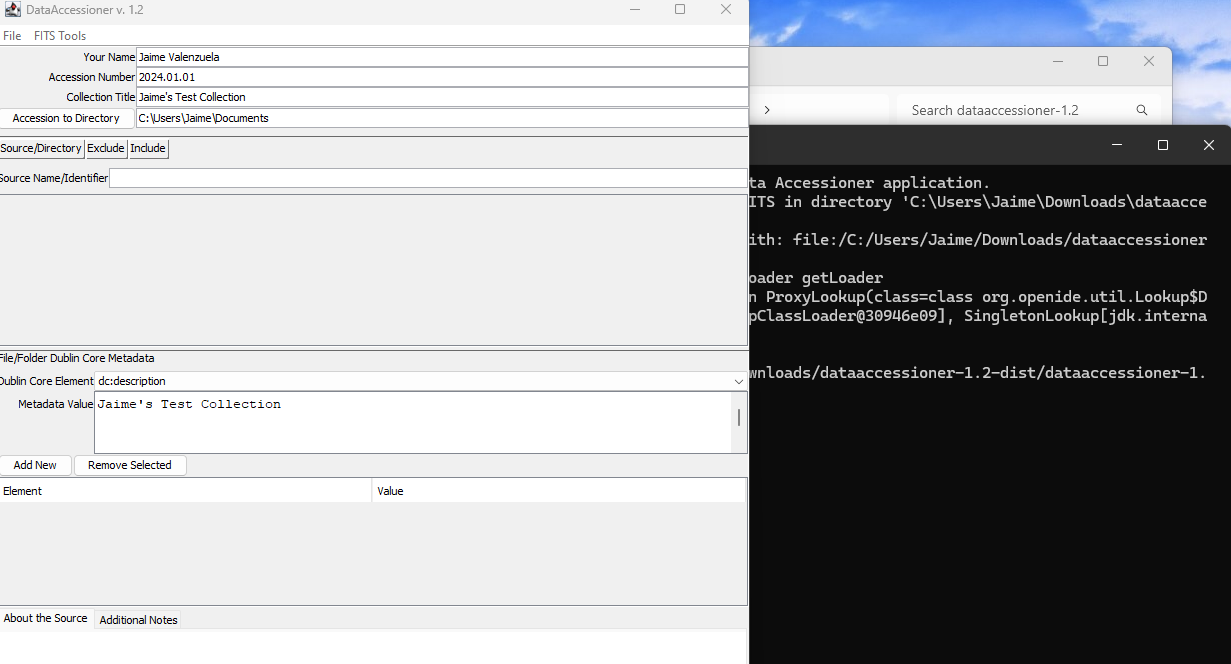
One of the best aspects of the Institute was the “Walk the Workflow” demonstration of a digital preservation tool called DataAccessioner. This open-source tool is designed to create a copy of the files that live on external media to a new file location such as a shared network drive. Important features of DataAccessioner include the ability to enter descriptive metadata following the Dublin Core metadata schema and the creation of checksums of the file being migrated from one location to another.


To actively participate in the demonstration, I downloaded and installed the latest version of OpenJDK (a freely available version of java) and a legacy version of DataAccessioner to my personal laptop. For tool testing purposes, I choose to use my personal laptop to bypass any administrative privileges associated with my institutionally owned work laptop. With software installed, I used pre-selected files shared with all Institute participants to use during a live end-to-end demonstration of the workflow. The workflow was also distributed physically allowing for a secondary form of instruction and to serve as documentation for use in the future. Screenshots were included in the documentation, and the files that participants used were the same files used in the demonstration. With the help of instructors, I was able to successfully create duplicate copies of the material I worked with. Having the opportunity to test drive a tool such as DataAccessioner under the guidance of instructors was the highlight of my Digital POWRR experience. 


Another great take away from the Institute is the “POWRR Plan.” The POWRR Plan is a personalized and actionable preservation plan that attendees work on in consultation with POWRR instructors to take home to their institutions allowing attendees to use some of their new found knowledge and take action. The plans include both short and long term goals that span form one month to twelve. 


One of my short term goals within my POWRR Plan was to properly document the digital objects under my stewardship. Using an existing internal LibGuide created for the purposes of documenting library workflows, I included a section titled “Digital Material: What it is and Where is it Stored?” One of my long-term goals is to create a statement on preserving digital collections at my law library. Having such a statement will help ensure that digital preservation is a part of my law library’s core philosophy within archives and special collections.


Friday, February 16, 2024

Non-Library Technology Solutions to Library Problems

When looking for technology to address a library problem, I was recently reminded of the tendency to look for answers in old, familiar places. However, that doesn’t always lead to a good solution to the problem at hand. Sometimes, the best answer to a library problem can be found in a different area entirely.

While reviewing safety practices following a few significant security incidents on campus, access services staff identified a need for a way to call other staff for assistance. In situations where it would be unwise to step away from the service desk to get someone from their office to assist, there was no good way to summon that help. These situations would include demanding patrons, suspicious behavior, or other activity that wouldn’t warrant calling campus police but should not be left for one person to deal with on their own. 


In trying to find a way to address this need, existing library technology infrastructure was the obvious place to look first. The landline phones were considered but dismissed because they are not discreet to use and it’s not always readily known who is in their office and available to go to the desk. The service desk is also equipped with a “panic button” but that was ruled out quickly as well since it is connected directly to campus police. Its intended use is for more urgent, more serious situations. 


The first step in expanding our thinking to find a solution was, pretty obviously, to look at devices specifically designed for security. However, those devices also proved to be a sledgehammer instead of the scalpel we were looking for. They were also prohibitively expensive. 


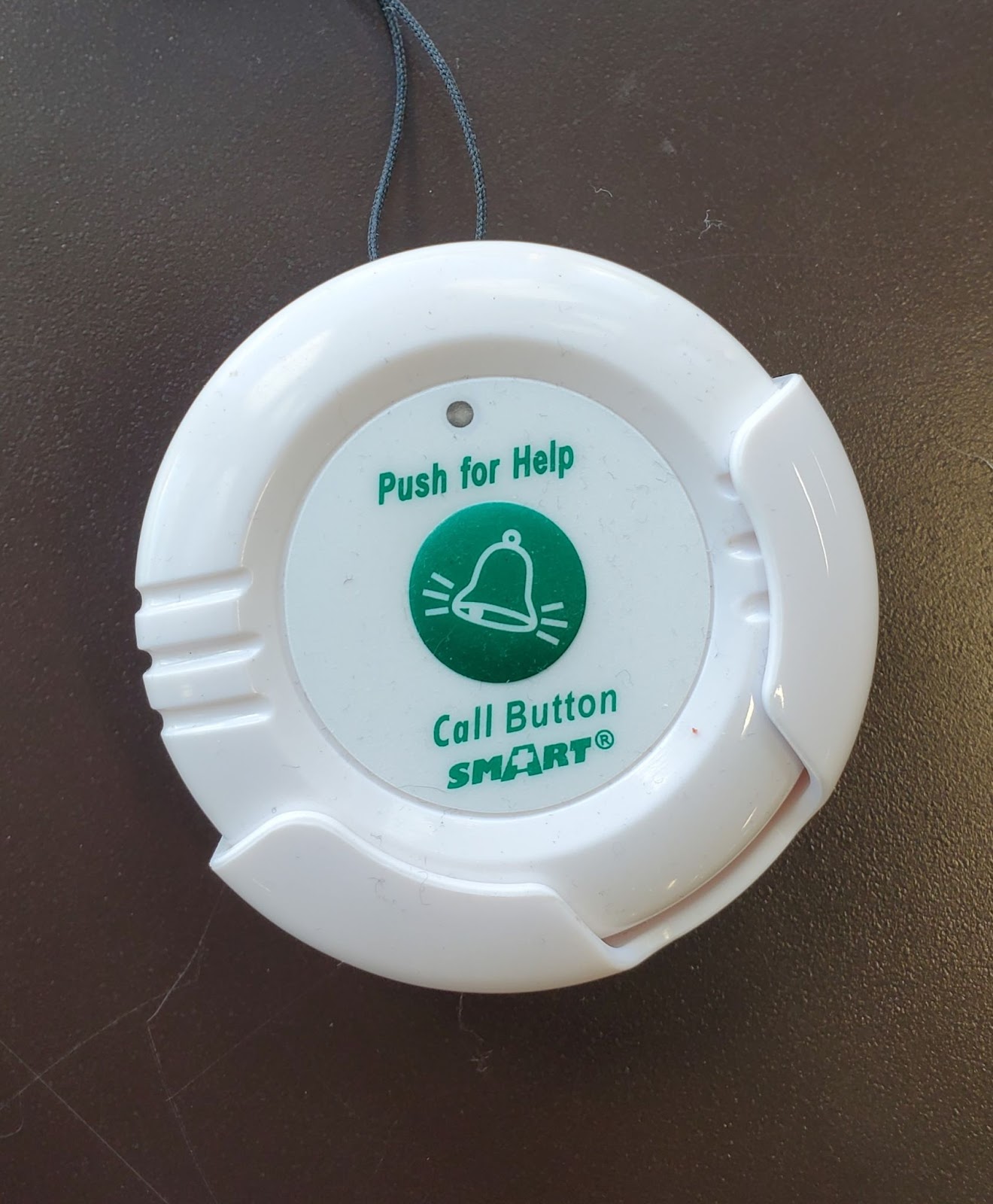
Much like conducting a reference interview, we had to get past the question being asked and determine what the real need was. In this case, it was simply a way to alert others that assistance was needed. With that in focus, our head of access services identified a solution that works for us: a medical call button. 


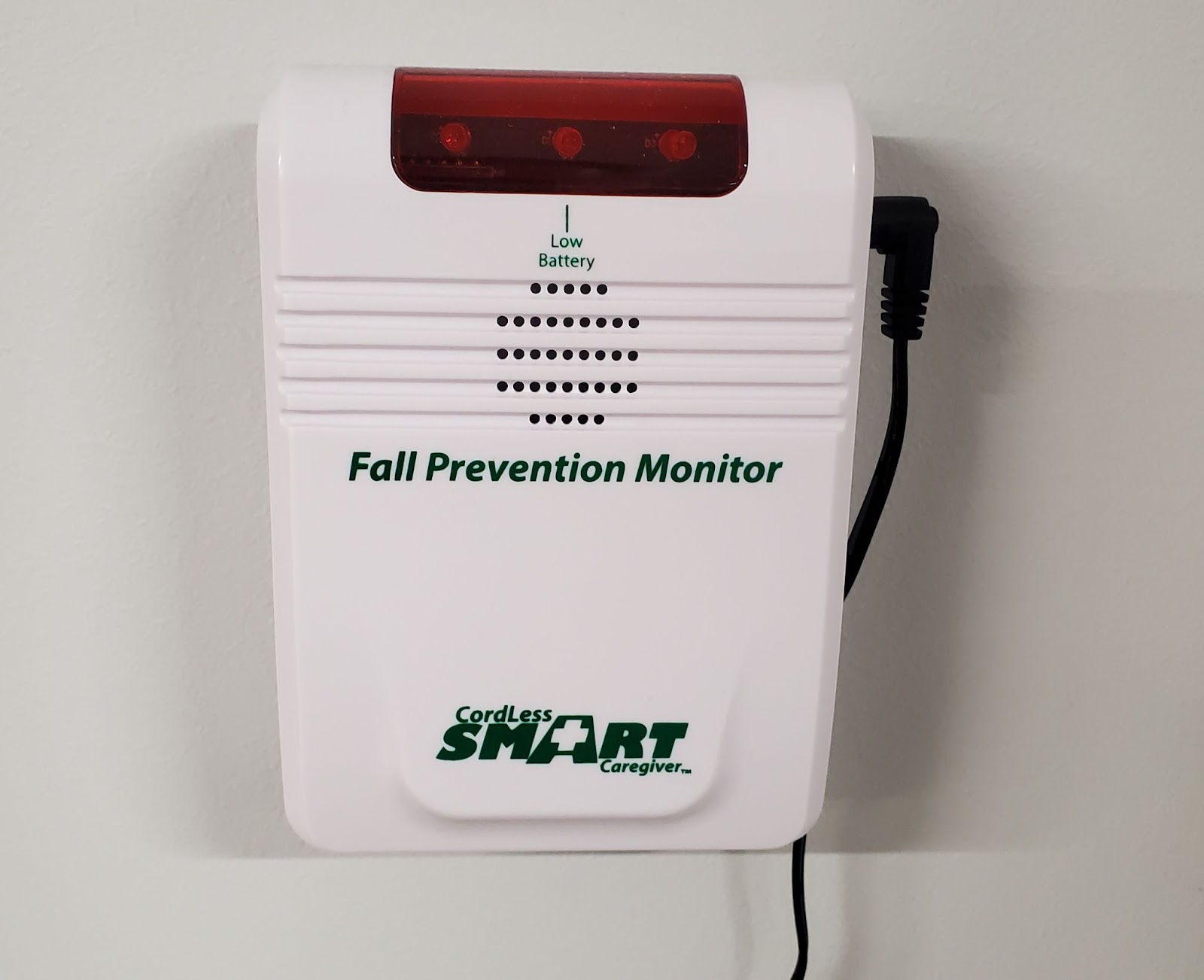
Technically designed as a way for people with mobility problems to call for assistance and avoid risking a fall, this device also answered our need. The small call button is mounted under the service counter and can be reached easily and discreetly. When pressed, it activates a quiet yet still noticeable chime in the office suite area behind the public service desk. It chimes until someone responds and resets it. 


This device perfectly met our needs. Access services staff now have a way to call for assistance if necessary and the peace of mind knowing that help is easy to summon. As an added benefit, this medical device was significantly more affordable than alarms designed and marketed as security devices.


Sometimes, a library problem can best be addressed by technology that wasn’t specifically designed for libraries. This situation was a good reminder to look beyond the familiar for solutions. 


Friday, July 7, 2023

GIS and Land Grant Research: The Evolving Role of Technology in Law Librarianship

Samantha Ginsburg, Law Library Fellow at the University of Arizona's Cracchiolo Law Library, has been participating in a large project to gather data about the University's land-grant status and its impacts on Indigenous communities. She has authored this guest post to share her experience using GIS systems to present this data in a clear, visual way. Applying GIS in this innovative way is a first for the library and can serve as a model for others. 

In the last year, the Daniel F. Cracchiolo Law Library undertook a significant task: researching and realizing the University of Arizona’s land-grant history and its impact on the state’s Indigenous peoples. The goal was to convey this information in an informative, transparent, and interactive manner. Recognizing that the essence of the land-grant concept revolves around land itself, our team made a deliberate decision to harness the power of maps and Geographic Information Systems (GIS) as the most effective means of presenting our research. Previously, I had limited experience using GIS from undergraduate coursework and infrequently encountered geospatial applications in my professional role as a criminal paralegal. This endeavor demanded a level of skill beyond what I was capable of. Fortunately, my supervisor, Cas Laskowski, is a mapping expert in addition to serving as our Technology & Empirical Librarian. We were able to navigate this ambitious project together, and as a result, I was able to continue learning and gain a deeper understanding of GIS technology. Ultimately, it became the perfect opportunity to see the practical application of how geospatial data could be used in an academic law library environment. 

To provide some additional context, this project was in response to the compelling article by High Country News (HCN) titled “Land-Grab Universities” and their subsequent investigation into land-grant universities across the United States. Using the HCN data as a starting point, we realized the uniqueness of Arizona’s land-grant history and that the quantity of land transferred to the state for purposes of higher education surpassed our original assumptions. While some tracts have been sold or swapped over time, most of the land remains managed in trust by the AZ State Land Department. I used the Bureau of Land Management’s General Land Office Records (BLM GLO) Automation web site to locate and verify the parcels that were periodically selected in the years following Arizona’s statehood. I was able to identify most of the land parcels throughout the state and the authority under which they were granted. Next, I created a data set from the BLM Control Document Index records drawn from the state selection list. Once I completed “data scraping,” reformatting, and cleaning the BLM land data into our dataset, Cas turned the data into a shapefile (a geospatial vector data file format).

We used ArcGIS, a powerful GIS software developed by Esri, to capture and manage our geospatial data. Additionally, creating the maps based on the BLM data required advanced skills and techniques that went beyond the functionalities of the software. For instance, converting raw tabular data into a shapefile that would display geospatial information demanded the use of a computer programming language. To achieve this, Cas crafted a Python script enabling ArcGIS to read and interpret the data accurately and present a geospatial representation on-screen. Throughout the process, we collaborated closely addressing any errors or challenges that arose. Cas generously shared her expertise, teaching me invaluable troubleshooting techniques applicable to both coding and data engineering. Once the maps were created, we seamlessly integrated them into ArcGIS StoryMaps, another product offered by Esri. StoryMaps is a web-based program that allows its users to create and feature maps alongside engaging narratives and other multimedia content. Our StoryMap, titled University of Arizona Land-Grant Project: Tracking the History of Land-Grant Enrichment at the University of Arizona, is now available to view through the Daniel F. Cracchiolo Law Library’s Special Projects’ page.

The impact of leveraging geospatial data goes far beyond historical projects like this one. Such technology within an academic law library setting can have profound benefits for law students and faculty.  In subject areas such as real and property law, water and environmental issues, and particularly indigenous law, where border matters and sovereignty are pressing topics, geospatial data can play a pivotal role. The use of geospatial technologies revolutionizes a traditionally paper-heavy profession, ushering in a new era of interdisciplinary work. As a Law Library Fellow, essentially a novice librarian in training, I had the incredible opportunity to use our library resources and now understand the implications of what data-driven librarianship can do. Law libraries, by teaching and supporting law students in technologies like GIS, can foster significant advancements within the legal profession and shape a more dynamic and progressive future.

-Samantha Ginsburg

Thursday, May 18, 2023

Thinking about the Future of Integrated Library Systems

 Two significant pieces regarding the current state and possible future of integrated library systems (ILS) were recently released. Taken together, these pieces show somewhat of a shift in the trajectory of ILS development. One on hand, the long trend of consolidation and shrinkage in the number of available systems continues, although at a slower rate since the major players have already consolidated. On the other hand, there are signs of cracks at the base as some libraries explore whether one integrated system can ever meet all their business and service needs and whether they want to be constrained by the development schedules of the major system vendors.


The first recent piece to discuss these trends is from Marshall Breeding. His 2023 Library Systems Report  was published on May 1. This long-running, always useful report, is a thorough documentation of the current library system marketplace and well-informed discussion about potential future developments. There are no real surprises in this year’s report. As Breeding states, proprietary systems from large vendors continue to dominate the market. But the report demonstrates that a growing number of libraries are choosing open source systems when they migrate from older systems. Currently in the U.S., approximately 10% of academic libraries and 17% of public libraries use an open source system but that number is expected to grow as the historic barriers to these systems are dismantled. Long periods of development for these systems have finally got them to a place where functionality and customization options rival those of proprietary systems. The big development in this area, as detailed in the report, is how EBSCO’s support of the development of the open source system FOLIO is finally bearing fruit as a growing number of large libraries and consortia are migrating to FOLIO hosted by EBSCO. This gives them the flexibility of an open source system without the still-costly overhead of maintaining one. 


Meanwhile, a two-part post by Andreas Mace at Scholarly Kitchen, Do Libraries Still Dream Unified Dreams, approaches the questions of ILS flexibility and customization from a different angle. It begins by posing the question, can any one system ever perfectly meet a library’s needs? For decades, the idea of one system running all functions has been the ideal that librarians and ILS vendors have tried to achieve. Lately, as demonstrated in the 2023 Library Systems Report, the focus has been on developing open source systems with flexibility and interoperability to meet that goal. What Mace describes in the second part of his post is a modular approach using a suite of integrated platforms; one for interlibrary loan, one for circulation, one for acquisitions, etc., all united seamlessly by open APIs and exchange-ready data standards. This modular approach would potentially allow libraries to more fully develop and customize the modules that are most crucial to their unique business practices without being tied to a development schedule for a larger integrated system. 


A takeaway from reading both these pieces in conjunction is that, after years of seeing ILS development dictated by the contracting number of vendors in the marketplace, change and a different approach may be on the horizon. Going forward, ILS development may depend more on the growth of open source solutions, especially smaller scale platforms that can be tied together as modules, creating the “perfect” ILS for each individual library.